
S&P 500 Pullback: Bull Trap, Bear Trap, or the Start of a Larger Rotation?
S&P 500 Pullback: Bull Trap, Bear Trap, or the Start of a Larger Rotation?
6/11/20262 min read
S&P 500 Pullback: Bull Trap, Bear Trap, or the Start of a Larger Rotation?
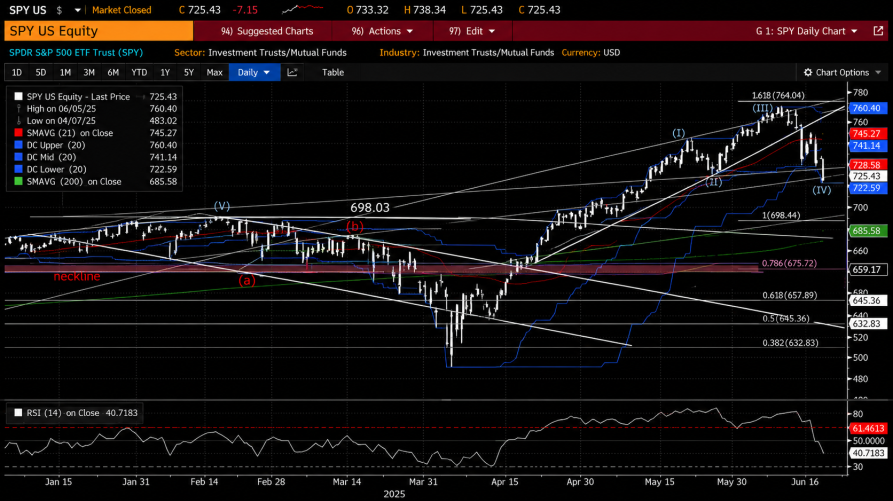
The S&P 500 is entering an important decision window after a sharp rejection from the recent highs. What makes this setup particularly interesting is not simply that price pulled back, markets pull back all the time — but where the pullback is occurring.
The index has broken down from a short-term rising structure and is now testing the lower portion of a key support zone that had previously acted as a launchpad during the prior advance. That makes the next reaction critical. From a technical perspective, the market is no longer in the clean upside trend it was in during the previous leg higher.
Momentum has cooled, short-term moving averages are starting to roll over, and the latest candles suggest sellers are becoming more aggressive on failed bounce attempts. This does not automatically mean a crash is coming, but it does mean the burden of proof has shifted back to the bulls. They need to reclaim broken support and convert it back into support quickly, or the next move lower becomes increasingly likely.
One of the biggest traps here would be assuming that every bounce is bullish. After a sharp downside move, markets often produce reflex rallies that look convincing at first, especially when price reaches obvious support. However, those bounces can become bull traps if they stall beneath overhead resistance. In that type of environment, the first bounce is often not the real reversal, it is the market testing whether sellers are still in control.
Volatility is also becoming a more important part of the equation. With implied volatility percentile now elevated, options premiums are no longer cheap. That means traders need to be selective. Even if the downside thesis is correct, chasing late puts into support can be dangerous because sharp reversal bounces and volatility compression can punish poor entries.
This is the kind of tape where patience matters more than prediction. The cleanest public framework is simple: if the S&P 500 can reclaim the upper resistance zone, then the bulls may be able to stabilize the market and force a short-covering bounce. But as long as price remains trapped below that zone, the market remains vulnerable to another leg lower into the next major support shelf.
That lower shelf is where we would expect buyers to attempt a defense, but if that area fails, the risk of a deeper correction increases meaningfully. For now, this remains a damaged structure attempting to stabilize. The next move is likely to be large because price is compressing after a major rejection. The most dangerous scenario for traders is getting emotionally attached to one side before confirmation.
The professional approach is to let price react at the key zones, then trade the confirmation, not the opinion. Our focus remains level-to-level: watch for failed bounces beneath resistance, watch how price behaves at the next support shelf, and respect the possibility of both bull traps and bear traps in a high-volatility tape. This is exactly the type of market where discipline, patience, and execution matter more than being loud about direction.
Help
Questions? Reach out anytime here
Contact
Subscribe TO WEEKLY NEWSLETTER
support@daytradersgroup.com
© 2026. All rights reserved.